Everything Heyship does for your import
You already use Excel well. What it does not do is cross your operation against the official databases, warn you about the control that holds the cargo, and keep the reason behind every number. That is what lives here.
Try free for 7 days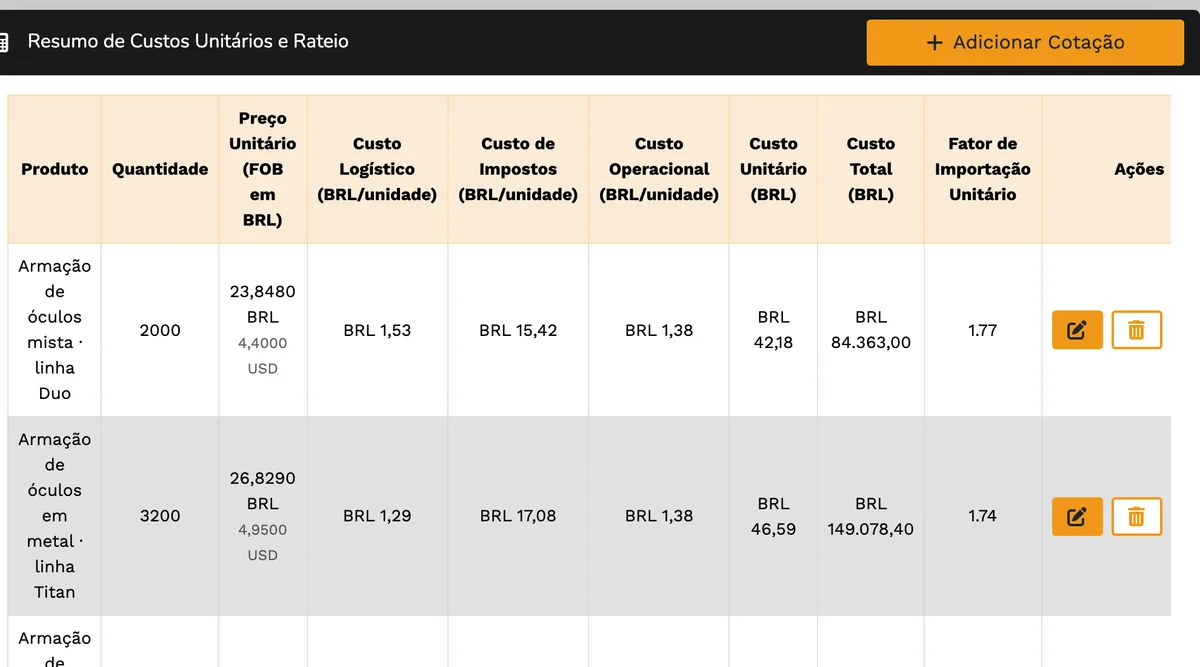
Landed cost
Freight, duties, insurance and fees down to the unit cost of each product.
Controls and trade defence
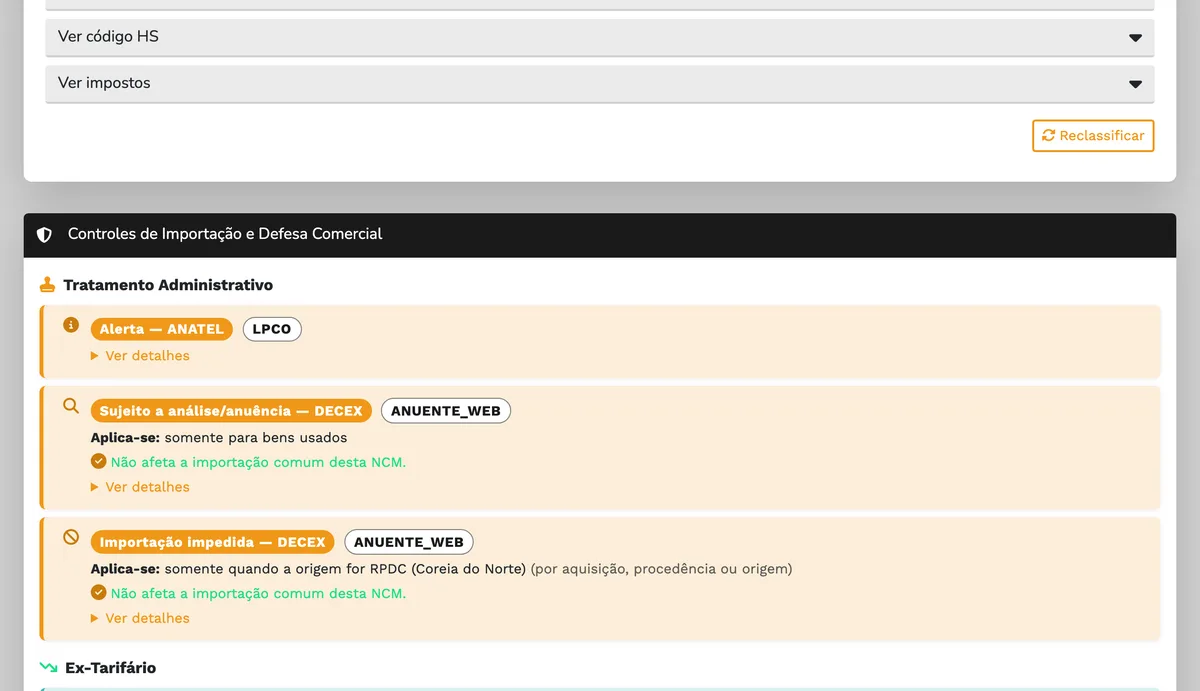
What holds cargo up shows before the purchase, with the condition that says if it reaches you.
Built on official data, not on estimates
- 89k
- import licensing records read
- 27
- state VAT regimes covered
- 18
- attention rules in the Scout report
NCM classification
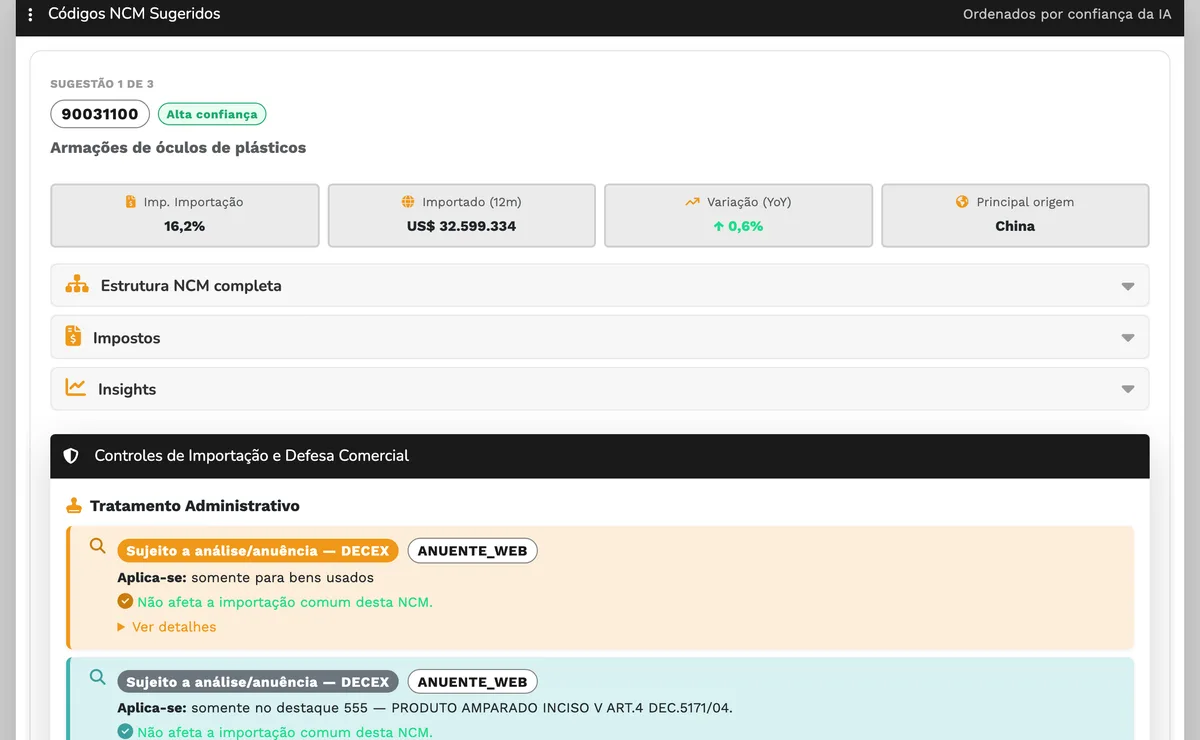
Suggestions with the AI confidence in plain sight. The call stays yours.
AI assistant
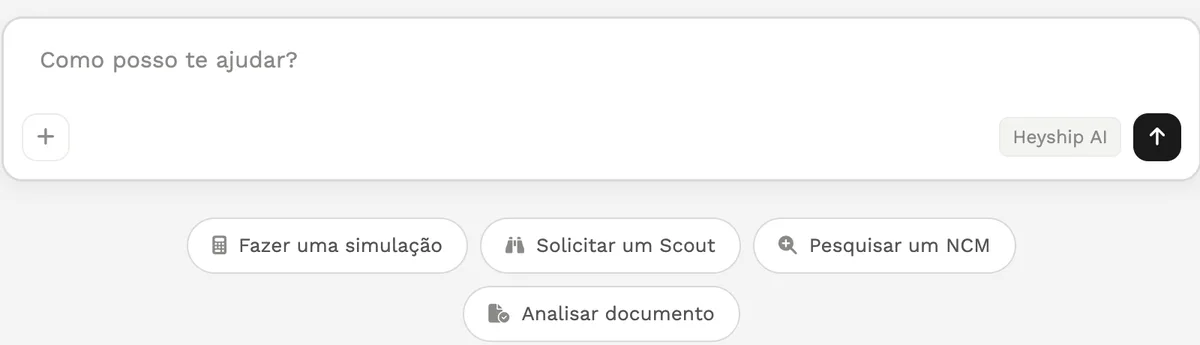
Ask, and the simulation changes beside you, without leaving the screen.
Market intelligence
What Brazil imports under that code, straight from ComexStat.
Collaboration and governance
Public link, roles and a record of who changed what.
Landed cost
Today: The real cost of the import shows up when the invoice arrives, and by then there is nothing left to renegotiate.
With Heyship: The quote is settled before shipping, allocated per product, and every line shows where it came from.
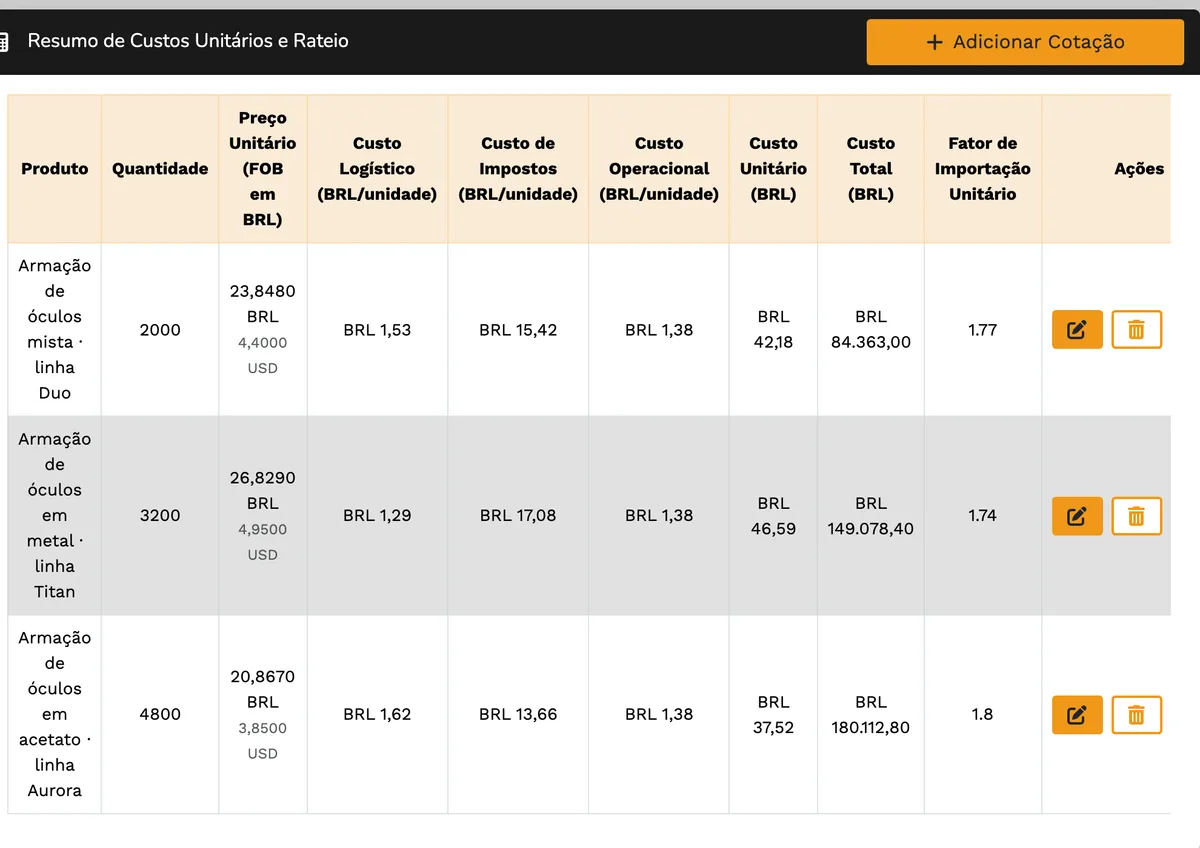
Cost per product, not just per shipment
Freight, insurance, duties, origin and destination charges allocated down to the unit cost of each item, with the import factor next to it.
Invoices read from the PDF
The platform extracts the line items, detects the currency, links importer and supplier, and flags when the PDF contradicts what is already on file.
Service quotes read from the PDF
Ocean and air freight, cargo insurance, customs broker fees and bonded warehousing enter the simulation straight from the partner's proposal, with no retyping.
Manual entry when there is no invoice
Not every deal starts with a document. You can build the product, the quote and the expense by hand and carry on the same way.
Expenses in an order that makes sense
Expenses and categories reorder by drag and drop, and the order you choose holds in the app, in the public link and in the PDF.
PDF carrying your brand
Customisable report templates, so the study reaches your client with your firm's identity instead of ours.
NCM classification
Today: The wrong NCM, Brazil's tariff code, only surfaces at inspection, and it costs you a fine, a hold and the deadline.
With Heyship: Suggestions arrive with how much the AI trusts each one, and the call remains yours.
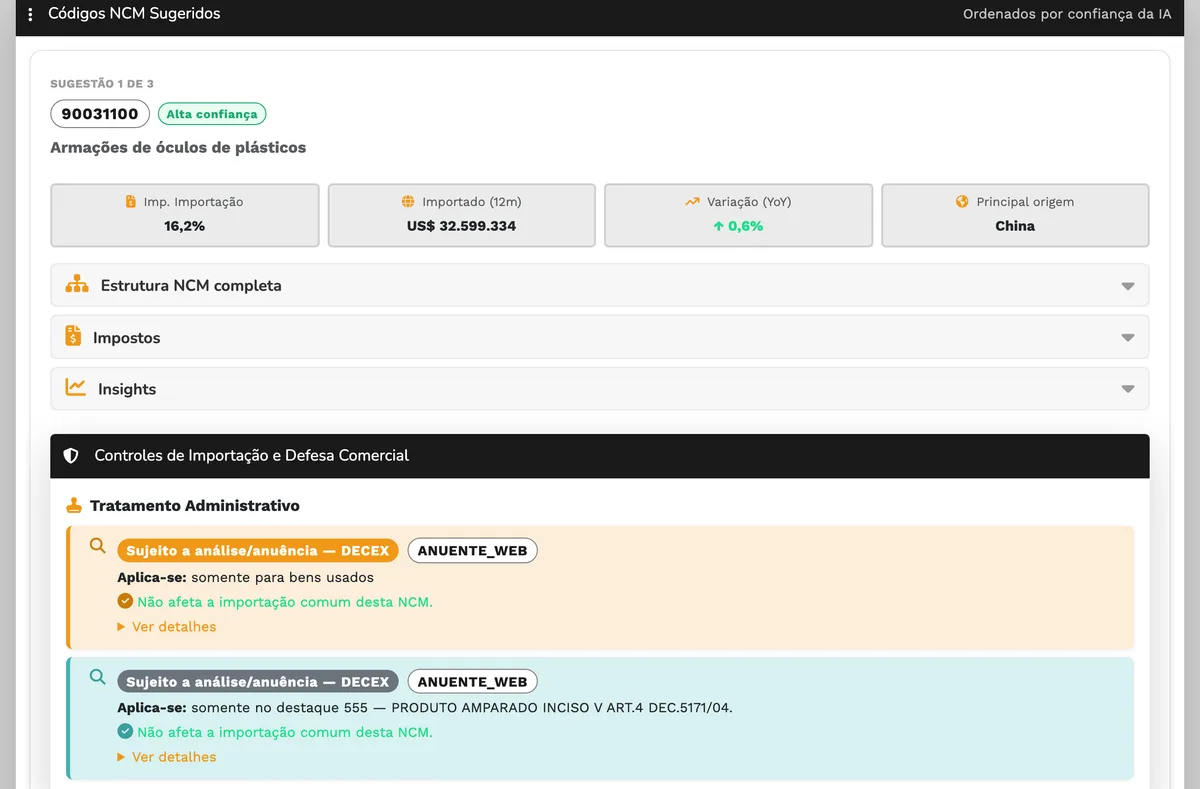
Classification by description or by photo
Describe the product or send the image. The AI suggests the candidate codes with the reasoning drawn from the general rules of interpretation.
Confidence in plain sight, no verdict
Every suggestion is labelled with the AI's confidence. None is presented as the recommended one, because the classification is the importer's responsibility.
Compare without opening anything
Import duty, twelve month import volume, year on year change and leading origin show up per suggestion, side by side.
The official description
The name on screen comes from the official table, not from generated text. Searching the same code twice returns the same thing.
Human review in the flow
A classification can be flagged for review and checked by someone on the team before it becomes the basis of a calculation.
Controls and trade defence
Today: The missing licence, the antidumping duty nobody spotted: both discovered with the cargo already at the port.
With Heyship: The controls in force for that code show up before the purchase, with the condition that says whether they reach your operation.
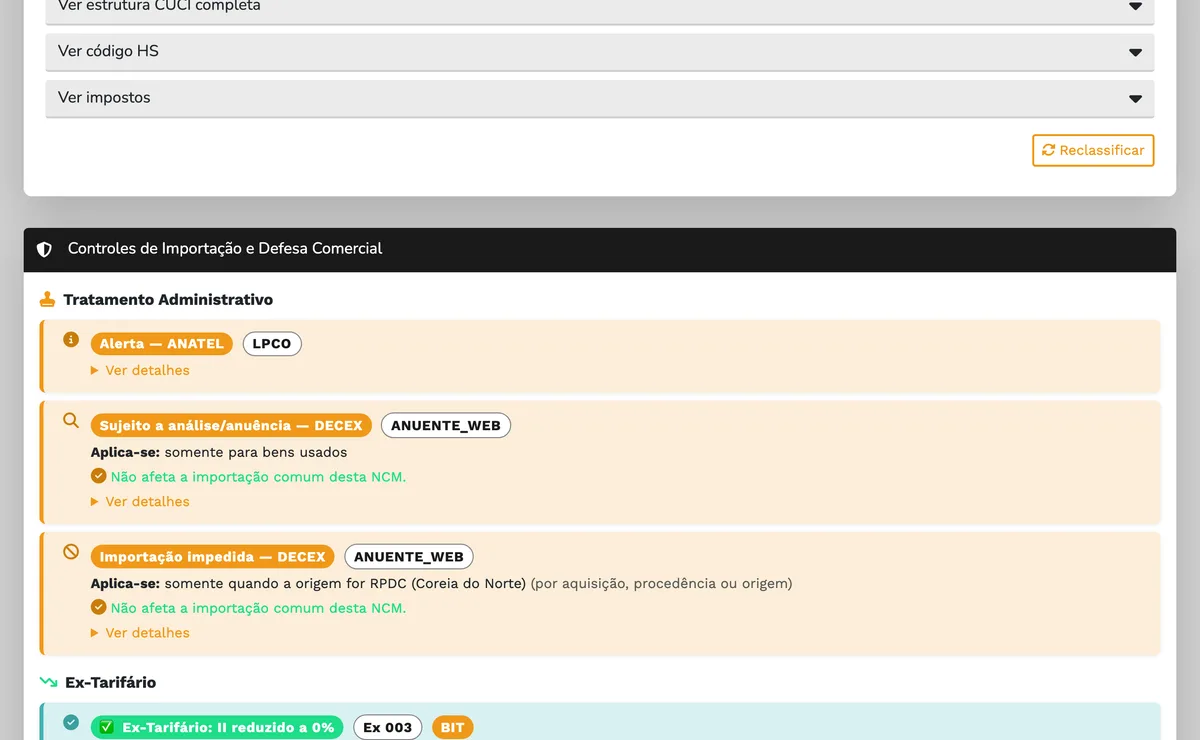
Import licensing, qualified
A requirement existing on the code is not enough. The platform shows the condition, whether it applies only to used goods, only to a given origin or only under a specific regime, and says when it does not reach an ordinary import.
Tariff exemptions in force
Import duty reductions applicable to the code, with the exemption number and its validity dates.
Antidumping
Measures in force by origin and by type, so the calculation does not come out too optimistic.
Checked and nothing found
When there is no control, the block says so explicitly. Silence used to leave "there is none" indistinguishable from "we did not look".
Market intelligence
Today: You negotiate with the supplier without knowing whether the price and the freight you heard sit inside or outside the curve.
With Heyship: Brazil's official import data for that code joins the conversation before the negotiation.
What Brazil imports under that code
Twelve month volume, year on year change, average price, supplying countries and market concentration, straight from ComexStat.
Where the goods come in
Clearance ports and airports, dominant transport mode, destination states and month by month seasonality.
Scout: viability in one report
You describe the product and get a report with the tariff classification, the duty rates, the controls, the market intelligence and the source of every number, built from official databases.
Provenance per block
Each section of the report shows the database consulted and the date of the query, so the number is still defensible six months later.
AI assistant
Today: Between the tax question and the answer there is an email to the broker and two days of waiting.
With Heyship: The question is answered inside the simulation, by something that can also change it.
A conversation that operates the quote
The side panel reads and edits the data while you ask: it switches the incoterm, adjusts the exchange rate, adds an expense and recalculates.
Consultant mode, with no simulation
You can ask a question, assess a code and analyse a document before any simulation exists.
Customs document review
Invoice, packing list and bill of lading checked against a list that covers ISPM-15, net against gross weight, incoterm and HS consistency.
Customs knowledge base
Search across customs regulation, import documents, infractions and penalties, so the answer comes with grounding instead of opinion.
Scenario comparison
Versions of the same import compared line by line, ranked by total cost, with the points of attention listed before the decision.
Answers in your language
The AI replies in the language of the question, whatever language the interface is in.
Collaboration and governance
Today: The study becomes a colourful spreadsheet attached to an email, and nobody knows which version the client opened.
With Heyship: The work is shared by link, with control over who sees what and a record of what changed.
Public link to the simulation
Client, partner or broker opens it without logging in, follows the scenario and can accept or decline, without anyone seeing your base.
Roles and permissions
Separate profiles for finance and management, with control over who edits and who only reads.
Dashboard by period
Costs and import indicators consolidated over whatever range you choose.
A record of what changed
Every change logged with author and date, so a six figure decision stays defensible in an audit.
Portuguese and English
The whole platform in both languages, including the public link that goes outside. Spanish and Mandarin are in preparation.
Start with the part that hurts today
Seven days free, no card. Build a real simulation and compare it against the spreadsheet you use now.